

6 essential padel tips for tennis players to improve faster
Are you transitioning to padel from tennis? Don't make these 6 simple mistakes and follow our experts' padel tips for tennis players.
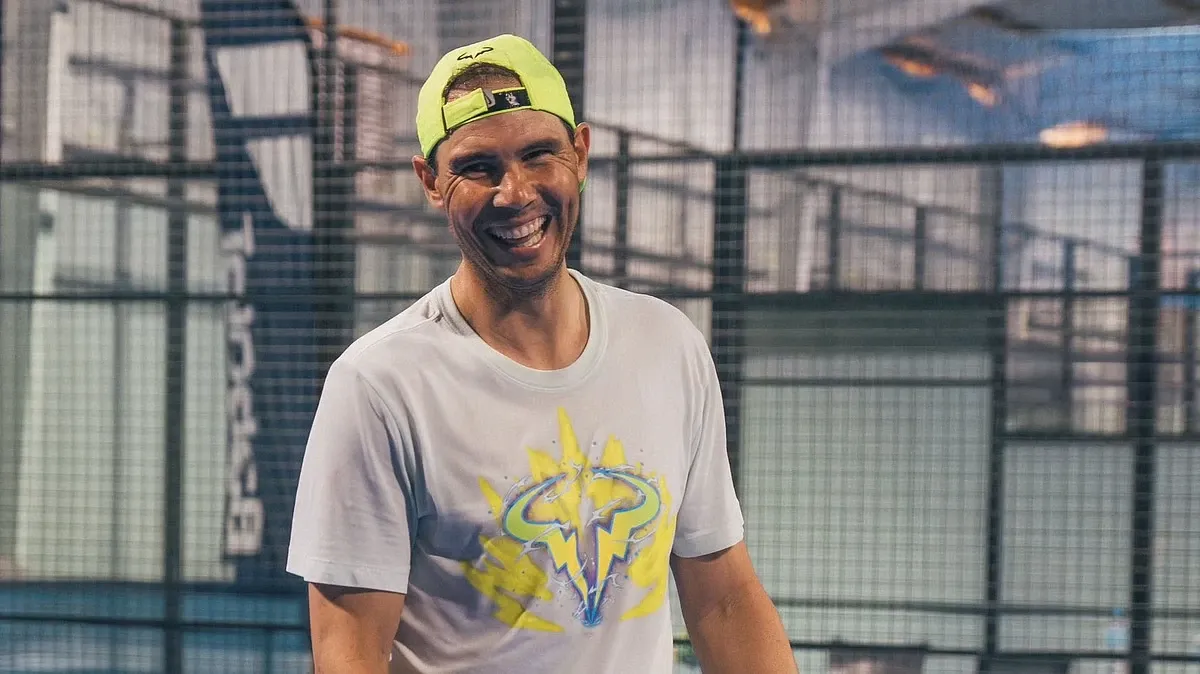
So, you’re a tennis player jumping into padel for the first time?
You've spent your whole life learning proper serve technique in tennis, and you've mastered a Federer-like single-hand backhand – How hard can padel really be?
It looks easy, right?
A bunch of people hitting less bouncy tennis balls using a racket more suited to the beach than a professional sport.
You're going to blow these guys away in this beginner match, you're going to hit the more topspin-y of topspin forehands with such a speed that seems to defy the physical restraints of the padel court.
You play your first padel game, you win. You hit the ball really hard, and the opponents were scared.
You could win tournaments at this rate, you could even turn pro at this point!
Every possibility seems feasible the first time you play padel.
If this sounds like you, then congratulations, you are officially the same as every single tennis player who has ever started playing padel.
I know what you're thinking, "You can't seriously convince me that padel is more difficult than tennis".
The beautiful thing is, I don't have to.
Padel will do all the convincing you need.
Padel will become the itch you can't scratch, the thirst you can't quench, the hunger you can't... You get the idea.
A few games in, you'll be addicted.
Welcome to Padel Anonymous, you're officially suffering from a sport-related addiction.
As someone who made the switch (and made all the classic mistakes), I understand your arrogance.
I understand how easy this sport looks at first glance.
And when you're spending your time playing against beginners with no racket sport experience, the false sense of confidence and security is immeasurable.
But then you play your first match against two 75-year-old Spanish guys who can barely move around the court.
You lose 6-0, 6-0.
You are mortal after all.
As somebody who has played tennis at the county level in the UK in my youth, and then gone on to transition to exclusively play padel here in sunny Portugal, I can officially give you some honest, actually helpful tips to fast-track your transition from tennis to padel.
If you're a total beginner with only a low base level of tennis, then check out our beginner padel tips to start using from day one.
1. Buying an expensive pro padel racket will not make you a better padel player
Many tennis players go straight for the pro-level, power-heavy, diamond-shaped padel rackets — then spend most of their time on court frustrated because they're struggling with control, mishits, and even elbow pain.
Buying an expensive pro padel racket will not make you a better player – I mean that (I learned that the hard – expensive – way).
When you're learning techniques for the vibora, bandejas, bajada, chiquita, gancho, volleys and smashes, you will need a medium-to-large size sweet spot in order to give you the feedback you need to calibrate your technique.
Different contact points on your racket can change the speed, spin, and placement of your shot.
Advanced, pro, and competition level padel rackets are designed to have tiny, compact sweet spots.
This means that any shot you hit that is outside of this tiny sweet spot will feel horrible with these pro palas.
Buy a padel racket that is round or teardrop shape first. Look for a beginner or intermediate padel racket that is known for having a large sweet spot. Some tennis players prefer a lighter padel racket (345-355 grams) because they're comfortable generating their own power, whereas others appreciate a heavier (365-375g) pala with a lower balance for control. Only you can decide what suits your style.
Pro tip: We’ve reviewed dozens of rackets built for tennis-to-padel transitions — check out our Beginner-Friendly Padel Racket Guide, and the Best Intermediate Padel Rackets of 2025.
2. Stop playing tennis!
Padel players can spot a tennis player from miles away, as good as a zebra can spot a herd of lionesses encroaching on their grazing spot.
You might think that your huge tennis forehand is winning points, that your fast volleys aren't returnable, that your topspin service into the glass is a surefire ace.
Well, the good news is, you're not wrong.
At the beginner level, you are the apex predator.
But once you go up to play in the intermediate level, you will become the prey.
Proper padel players will expose your poor court positioning, they will exploit your phobia of hitting the ball off the glass, and they will laugh at your fast volleys, simply pushing the ball back off the glass with ease.
Padel drill for tennis players to do in the warm up:
- You're already comfortable playing with power, so in the warm up, embrace playing slow.
- Savour your pace and power for the really easy balls that are too high and too irresistible not to smash.
- Your objective in the warm up should be to practicing hitting the ball to the opponents feet – because more often than not, they will likely have to lift the ball up when they return, allowing you to hit a higher, more attacking shot.
- Hit lobs in the warm up, calibrate your range. Start to treat the lob as an attacking shot in your mind. Hit a lob when you have plenty of time on a relatively easy ball. Try not to lob as a defensive last resort, instead hit fast into the body or flat and slow down the middle if you're in trouble.
3. Play the walls early and often
That leads me nicely to my next point. If you avoid the walls, you're just kicking the can down the road. You will be exposed at some point, it's just a matter of when, not if.
The glass is your friend. It offers you a chance to spring a counter-attack by hitting a well-placed chiquita, or a stunning deep attacking lob that pushes your opponent back.
Coaching drill for learning how to use the walls in padel:
- In the warm up, let the ball hit the back glass and get used to pushing the ball back.
- Squat, get as low as you can. The lower you get, the more chance you have of returning the ball.
- Similar to the previous exercise, aim to get the ball to land at or near the opponents feet.
- Take lots of small footsteps to follow the ball back to the glass, and then forward, so that you can be behind the ball when you intend to make contact.
- Keep the padel racket as close to the ball as possible – almost like you're following the ball with your racket.
- As you improve, you can start to lob off the glass, and even begin to aim specifically at feet of your opponents backhand side (left leg for right-handed players, right leg for left handed players – you'll soon understand why).
- The wall is weird at first, especially for tennis players, but once it clicks, the whole game slows down in your favour.
4. Stay compact — your racket and footwork
Padel is all about time and timing.
Huge backswings = less reaction time.
When you play better padel players, they will notice immediately how much you swing on your smashes, groundstrokes, or volleys.
They will simply play the ball immediately back to you, because they know that you won't have enough time to ready yourself in time.
Get used to short swings, short follow-throughs (especially on volleys), and quick, almost instantaneous recoveries after you hit the ball.
Pro tip: Practice hitting the ball, recovering as quickly as possible and performing a small split step before your opponent hits the ball. If you're not able to recover in time, try slowing the pace of your shot to give yourself more time to recover.
5. Master the bandeja — your new best friend
Smashing is fun, don't get me wrong.
It's a key element as to why tennis players immediately enjoy playing padel.
But at the intermediate/upper-intermediate levels upwards, your amazing smash will become less and less effective.
It may even become your weakness when playing against better padel players.
Padel is about consistency, and only taking as much risk as is necessary to win the point.
A good bandeja (a soft, high, controlled shot played from the air) is your defensive weapon.
It will allow you to conserve energy, to build consistency, and to vary your game.
What makes a good bandeja in padel?
- A good bandejas should remain relatively low, generating a low bounce off the opponents glass
- Placement should typically be cross-court, towards your opponents’ feet
- Your bandejas should be hit around or just above eye-level, and have a slight side-spin
6. Don't charge to the net every time
In tennis, you charge the net like a warrior after hitting an approach shot.
In padel, you need to sneak in and hold the net smartly as a team.
By far the most frustrating thing playing with a partner who is a tennis player, is this:
You hit a fast forehand or backhand to your opponent who is stood at the net, you immediately charge in to the net after hitting the shot, the opponent simply block-volleys the ball at your feet as you're running in, and you lose the point because you cannot adjust in time to return the ball.
The above point plays out time and time again for tennis players who are playing padel.
Practice moving to the net as a team, to reduce gaps.
Move up to the net if one of you hits a deep lob, or if the ball is going to hit the back glass.
Pro tip: Regardless of how close or far you are from the net, make sure you stop running and perform a small split-step before your opponent hits the ball. This will change your game.
We'll leave it there as the vast amount of information in padel can get overwhelming.
Switching from tennis to padel is humbling at first — but once you stop trying to play tennis on a padel court, everything will fall into place.
Embrace proper padel technique, learn from your mistakes, and play with patience.
Check out our guide to the best beginner padel rackets, our guide to intermediate padel rackets and the ultimate women's pala guide of 2025.
Either way, enjoy the ride!