

Black Crown Special Max Padel Racket Review
There's a particular type of player who walks into the club already thinking about the third shot of every point. If that's you, the Black Crown Special Max is going to look familiar from the first warm-up.
4 min read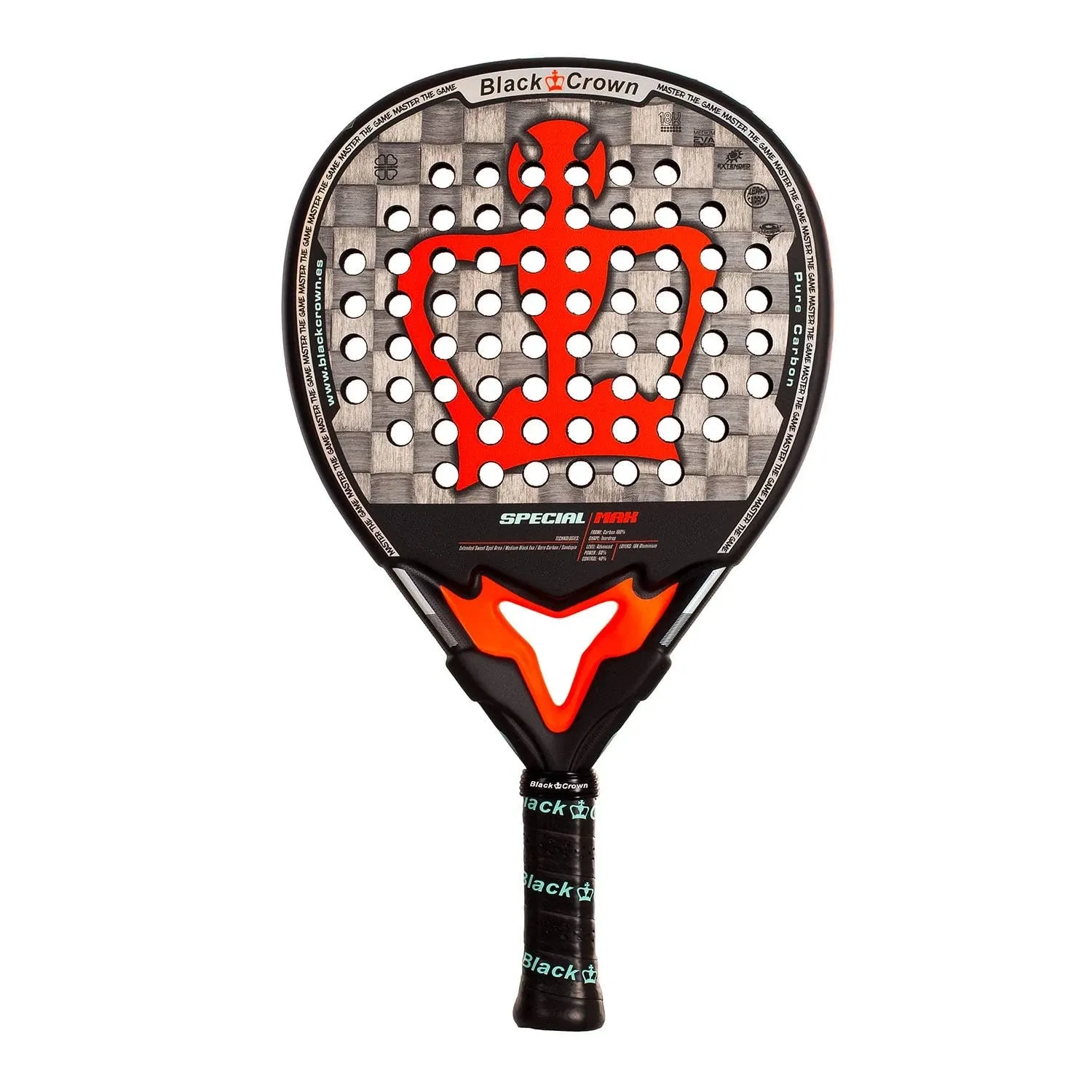
The honest verdict on the Black Crown Special Max
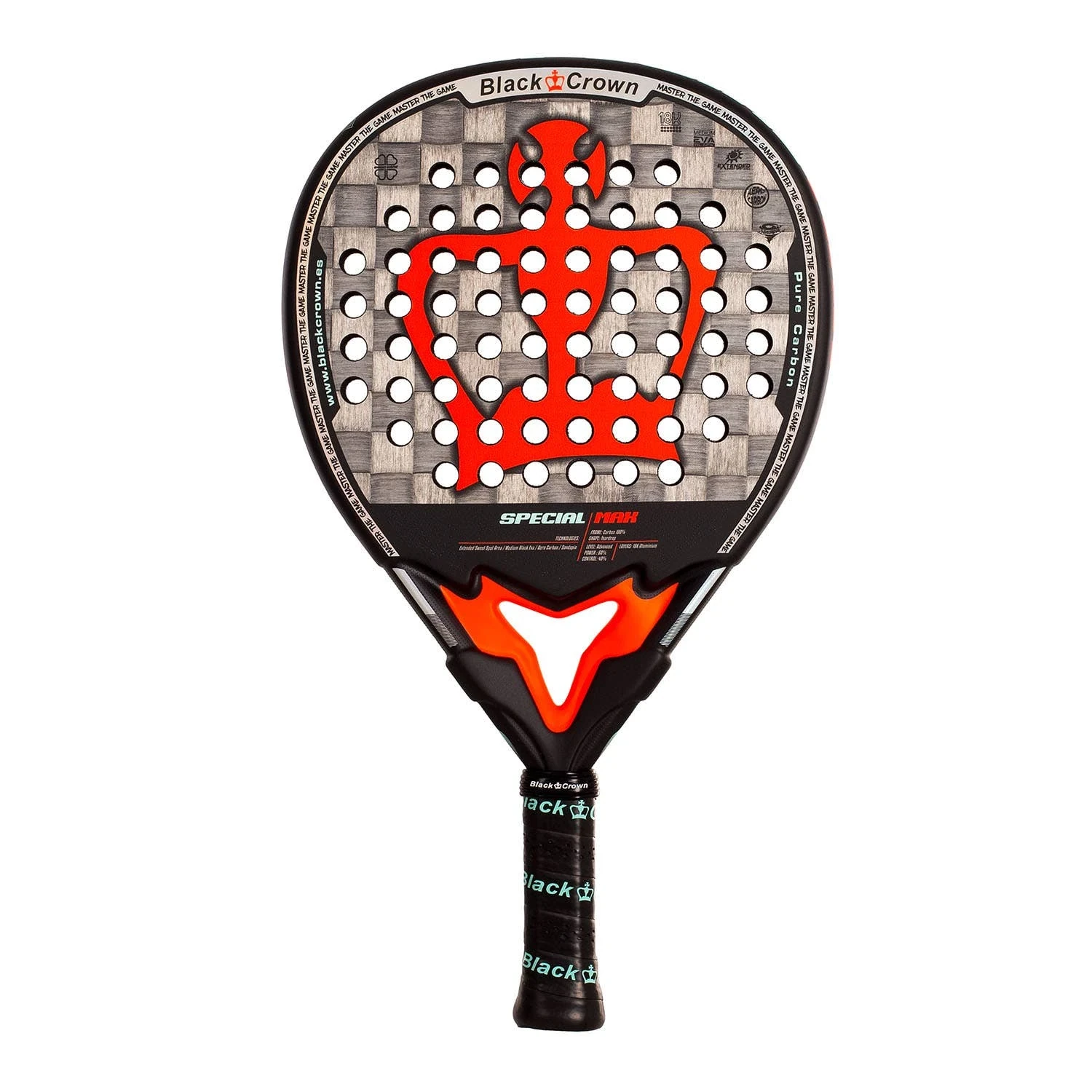
There's a particular type of player who walks into the club already thinking about the third shot of every point. If that's you, the Black Crown Special Max is going to look familiar from the first warm-up. It's a 370g teardrop with a medium balance, a medium-hardness EVA core, and a rough fiberglass face — a configuration that telegraphs its intent before you even hit a ball. This is a hybrid leaning toward attack, built for someone who already has the technique to handle weight up front.
Who it actually suits
Let's be direct: 370g is heavy, even by professional standards. Combined with a teardrop head and a medium balance, the swing weight pushes the racket out of the hand. That isn't a flaw — it's the whole point — but it does narrow the audience.
This frame makes sense if you:
- Play at an advanced or professional level and want a finishing weapon at the net. - Have a clean, compact technique on bandejas and viboras and don't muscle the ball. - Want a racket that punishes loose balls rather than one that helps you build points patiently.
If you're a club player still developing wrist and shoulder mechanics, this will frustrate you within two sets. The mass is unforgiving when timing slips.
Where it should feel strong
The combination of medium-hard EVA and a rough fiberglass surface is a familiar recipe for attacking padel — and the reference scores back that up, with power rated noticeably higher than maneuverability. A few situations where this frame should genuinely shine:
- **Smashes and viboras:** the weight does the work. You don't need to swing harder; you need to swing cleaner. Flat smashes feel heavy on the bounce, and the rough face gives the vibora the bite it needs to skid off the glass. - **Bandejas with intent:** because the balance isn't fully head-heavy, you can still control depth and placement rather than just dumping the ball back. A medium balance on a teardrop is a sensible compromise here. - **Blocking and counter-attacking volleys:** 370g absorbs incoming pace well. Quick reflex volleys at the net should feel stable, with the ball coming off the face rather than jumping unpredictably.
The medium-hardness core is the quiet hero. It keeps the response from going dead on touch shots — chiquitas, low volleys, dinks off the glass — which is exactly where pure hard rackets tend to lose their personality.
Where it will frustrate you
Maneuverability is the obvious compromise. The reference data flags it (79 versus 90 for power), and that gap is real on court. Expect:
- **Slower hands in fast volley exchanges** when both pairs are at the net trading at chest height. If you're not already quick, this racket won't make you quicker. - **Demanding defense.** Lobbing out of trouble from the back glass with 370g on the end of your arm requires real shoulder strength. After a long match, your bandeja height will start to drop, and that's when errors creep in. - **A sweet spot that rewards centering.** It's not small — the reference score of 86 is healthy for a teardrop — but mishits high on the face will feel noticeably duller than clean strikes.
This is not a forgiving racket. It is a precise one, and there's a difference.
- Enough pop for attacking without feeling wild
- Predictable placement on volleys and bandejas
- Comfortable response when blocking fast balls
- Not a specialist frame for players with one dominant weapon
The hybrid question: power or control?
Hybrid is a marketing word that often means "we couldn't decide." In this case, the spec sheet does suggest a real attempt at balance: the teardrop and weight push toward power, while the medium balance and medium-hardness core pull back toward control. The result, on paper, is a frame that wants to attack but won't punish you on touch shots the way a fully head-heavy diamond would.
For a serious attacking player, that's the right kind of compromise. You give up some maneuverability you'd get from a 360g round shape, and you gain a finishing tool that can still play a chiquita without feeling like a brick.
Should you buy it?
If you're an advanced or professional-level attacking player, physically conditioned for a heavy frame, and you want a 2026 option that rewards clean technique with serious finishing power — the Black Crown Special Max deserves a spot on your shortlist. The rough face, EVA core, and teardrop shape are a coherent package, and the medium balance keeps it from becoming a one-dimensional smasher.
If you're still working on mechanics, or you play long matches where stamina decides points, look at something lighter first. This racket will expose tired technique faster than it rewards good technique.
Final take
The Special Max isn't trying to be a friendly racket, and it shouldn't be judged as one. It's a tool for players who already know what they want to do with the ball at the net and need a frame that can finish the point. Within that brief, it looks well-built. Outside it, it'll feel like too much racket — because it is.