

How to Choose the Perfect Padel Racket for Winter
Looking for a mid-winter boost to your padel game? Check out our guide on how to choose the perfect padel racket for the winter months.
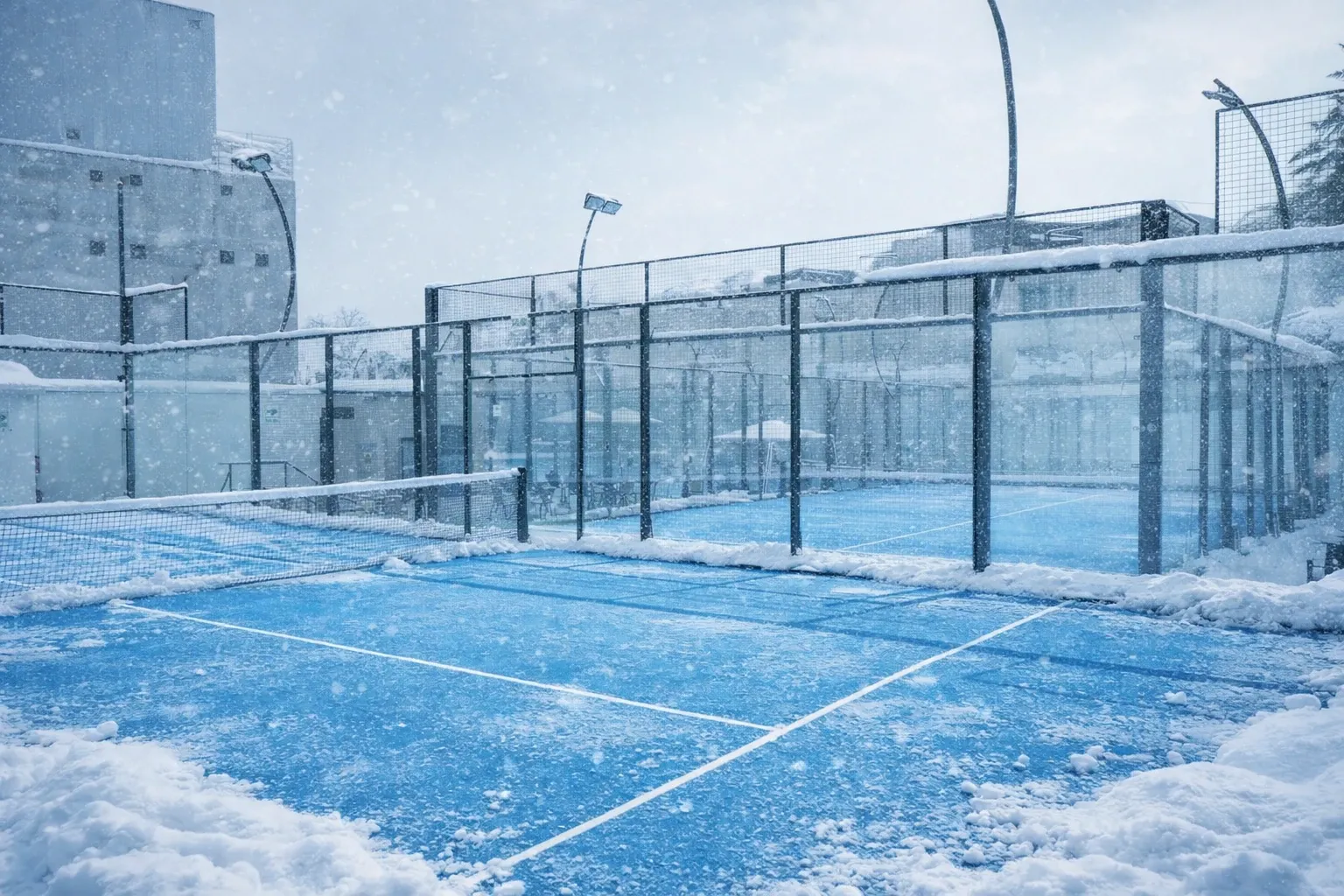
The first day of winter for a padel player is a solemn moment for most aggressive padel players.
Arriving on the damp court, with your hard padel racket, your tin of new padel balls, quickly realising a few shots in that your summer padel strategy of using the pace of the courts has gone.
The glass is wet, the ball isn't bouncing as much, and you're having to get incredibly low in order to pick balls off the back glass.
A few games into the set, and your hard EVA core padel racket seems to have lost the magic, power, and control that was making you a threat in the summer months.
RIP x3... See you again in June.
Some padel players, especially those just starting out, tend to think of winter padel as “summer padel with a hoodie on”, but in reality, it is almost a different sport for some.
The court plays slower. The ball becomes heavy. Your racket — whether you realise it or not — becomes either your best ally or your biggest limitation.
This guide breaks down:
- What actually changes in winter conditions
- Indoor vs outdoor winter padel (and why they’re not the same)
- What makes a great winter padel racket
- A summer → winter racket translation guide
- Condition-specific recommendations
- Top 10 winter padel rackets (expert-curated)
Padel doesn’t stop in winter — it mutates.
What feels crisp and explosive in August becomes slower, heavier, and far less forgiving by December. Balls die early. Glass rebounds flatter. Your timing slips by a fraction. And suddenly the racket you trusted all summer starts to feel like it’s working against you.
This isn’t psychological. It’s physics.
Cold air is denser. Rubber stiffens. EVA foam loses elasticity.
What changes in winter padel?
The first thing players notice in winter isn’t their racket — it’s the ball.
In lower temperatures, padel balls lose internal pressure faster and rebound less energetically. The rubber core stiffens, reducing dwell time on the face of the racket. Shots that normally spring off the strings in summer now sit up just long enough to be countered — or worse, fall short of the glass entirely.
What players describe as a “dead” ball is really a loss of elastic energy. And when the ball stops helping you, the racket has to pick up the slack.
What makes a good winter padel racket?
Winter doesn’t demand more power — it demands usable power.
Rackets with extremely stiff carbon faces and hard EVA cores are designed to amplify fast swings in warm conditions. In winter, that same stiffness works against you. The ball compresses less. Vibration increases. Mishits feel harsher, and control evaporates under pressure.
The rackets that consistently perform well in cold conditions share a few traits:
They allow the ball to sink into the face fractionally longer.
They preserve feel when the ball itself feels lifeless.
They forgive slight timing errors without punishing the arm.
This is why softer carbon, fibreglass blends, and medium-soft EVA cores quietly dominate winter play — even among advanced players who would never touch them in August.
Can I use a hard padel racket in winter?
Every padel player is different, so there is not hard and fast rule on what you padel racket you should be using in winter, but here we'll draw on generalities based on the science, and the trends that we observe each winter season at our clubs and online.
Cold conditions transmit vibration more aggressively through the arm. Tendons become tighter, muscles are generally colder and less flexible, and injuries begin to increase in the winter months.
Recovery is slower.
Players who stubbornly stick with ultra-stiff summer rackets through winter often don’t notice the damage until February — when elbow pain, wrist discomfort, or shoulder fatigue suddenly appear.
What actually is a winter-friendly padel racket?
Winter-friendly padel rackets aren’t just about feel. They’re about taking some of the load off your body, giving you an extra bit of comfort, power and control, to ensure that you can last the winter months without a padel-related injury.
Some power-focussed players won't want to transition to a padel with a softer core, but there is good reason to encourage at least moving to something a little more forgiving on the arm.
Even those on the more aggressive side of the padel spectrum, will realise that it requires infinitely more energy and strain on the body to generate the same pace and power that they'd become accustomed to during the warm conditions of the summer.
It's almost impossible to play aggressive, instead reframing their idea of aggressive, to focus more on effect (spin), tactics, and picking the opportunities to play with pace.
A winter-friendly padel racket, generally-speaking, should have the following characteristics:
- Less stiff racket face
- Softer core (e.g Soft EVA)
- Fibreglass (especially important for beginners)
- A larger sweet spot
- Control-focussed shape (round, hybrid/teardrop)
- Good vibration-dampening technology (either embedded in the racket design, or via other tools like Bullpadel vibration dampeners).
Next in the series, we'll take a look at some of our top recommendations for winter padel rackets to buy in 2026, and some must-own winter padel accessories to help your game in the slower, humid months.