

What actually is 18K, 12K, 6K and 3K carbon in padel rackets?
If you're looking for a new padel racket, you may see the terms 18K, 12K, and 3K carbon. But what does this mean and how does it impact your padel?
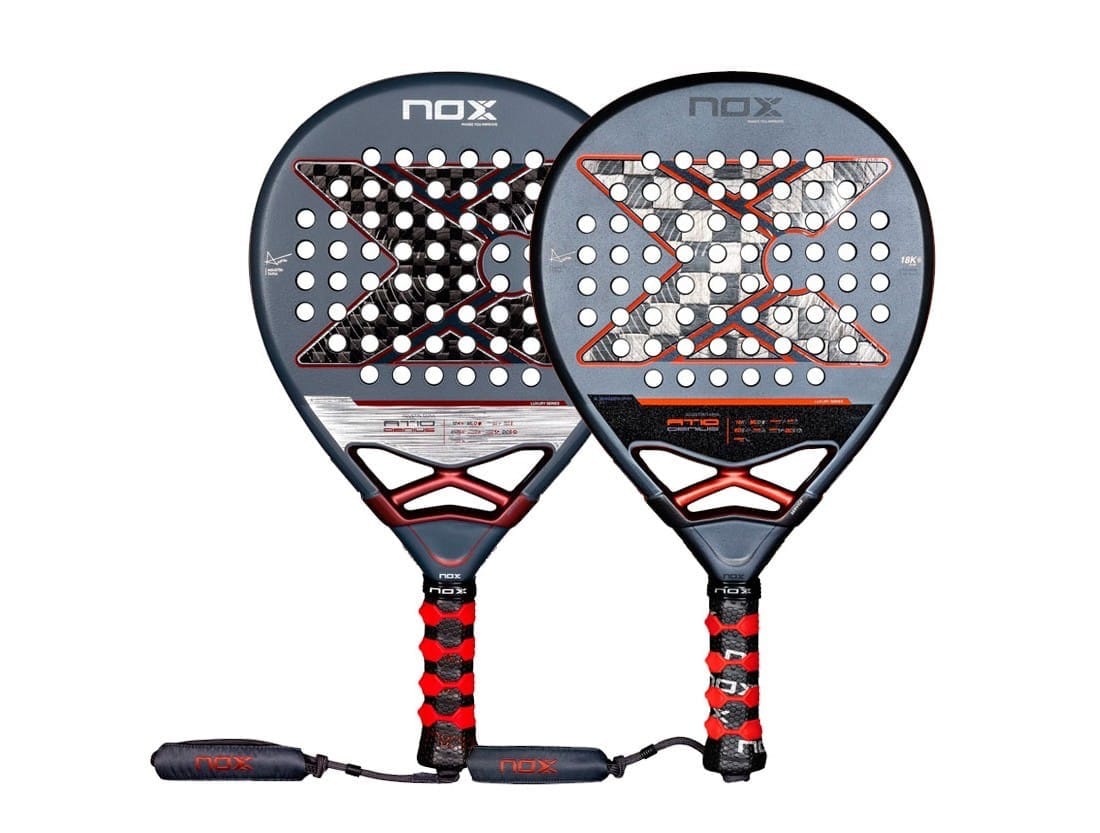
If you’ve been researching padel rackets like the NOX AT10 series, you’ve likely come across terms like 18K, 12K, and 3K carbon.
At the beginning of my padel journey, I had absolutely no idea what these terms meant.
I simply thought they were just standard naming conventions for padel racket lines that have minimal differences between each model.
These numbers simply refer to the carbon fibre weave used in the racket’s surface, which affects how it feels, how much power it generates, and how comfortable it is to play with.
But how do these carbon fibre weave numbers actually impact your game?
This guide breaks it down so you can make an informed decision when choosing your next racket.
What are the key differences between 18K, 12K and 3K carbon in padel rackets?
The numbers that you see in most modern padel racket models refers to the number of carbon filaments per thread in the weave. For example:
• 18K Carbon → 18,000 filaments per thread
• 12K Carbon → 12,000 filaments per thread
• 3K Carbon → 3,000 filaments per thread
The higher the number, the more woven filaments, making the padel racket surface stiffer and more resistant to deformation. This directly impacts the padel racket’s hardness, power, and comfort.
Hardness vs. Playability – Which carbon type should you choose?
| Carbon Type | Feel | Power | Control | Comfort | Best For |
|---|---|---|---|---|---|
| 18K Carbon | Very hard | Very high | Medium | Low | Advanced players who want maximum power |
| 12K Carbon | Medium-hard | High | High | Moderate | Balanced players who want power with some comfort |
| 3K Carbon | Softer | Lower | Very high | High | Control-focused players who want comfort |
18K Carbon padel rackets – Best for power
• The stiffest option, meaning it maximises power on smashes and volleys.
• Less flex means less absorption, so shots feel more direct.
• Not very forgiving—requires good technique to control.
• Best for aggressive, attacking players who rely on powerful overhead shots.
🚀 Best for: Advanced players who prioritise power over comfort
12K Carbon padel rackets – Best for an all-round padel game
• Offers a balance between power and control.
• Slightly softer than 18K, giving more feel on touch shots.
• More comfortable than 18K but still provides solid power.
• Ideal for players who want a bit of everything—a mix of attack and defence.
🚀 Best for: Intermediate to advanced players who want both power and control.
3K Carbon padel rackets – Best for comfort and feel
• More flexible, absorbing more energy for a softer, more controlled feel.
• Easier on the arm, reducing the risk of injuries like tennis elbow.
• Great for placing the ball with precision rather than hitting winners.
• Best for control-based players who rely on consistency rather than raw power.
🚀 Best for: Beginners or control-focused players who value comfort and placement.
While carbon weave is a major factor, racket hardness is also influenced by:
- Core Foam:
• EVA Hard Foam → Adds stiffness, more power, but less comfort.
• EVA Soft Foam → More flexible, absorbs shocks better, less power.
2. Surface Material:
• Full Carbon → Stiffer, more durable.
• Fibreglass → Softer, more comfortable, but less power.
3. Temperature Sensitivity:
Harder padel rackets feel even stiffer in cold weather. Softer rackets might feel too mushy in hot conditions.
If you’re just starting out, a 3K or 12K carbon racket will be more forgiving. If you’re an advanced player who loves smashing the ball, 18K carbon might be the best choice.
Now that you understand carbon hardness, check out our top racket recommendations below and find the perfect one for your playing style.
🔥 Click here to see the best beginner rackets of 2025!