

Can padel in the USA survive Trump's tariffs?
Trump’s new China tariffs could raise padel racket and court costs. Is the sport’s growth in the US under threat? Here’s what players and clubs need to know.
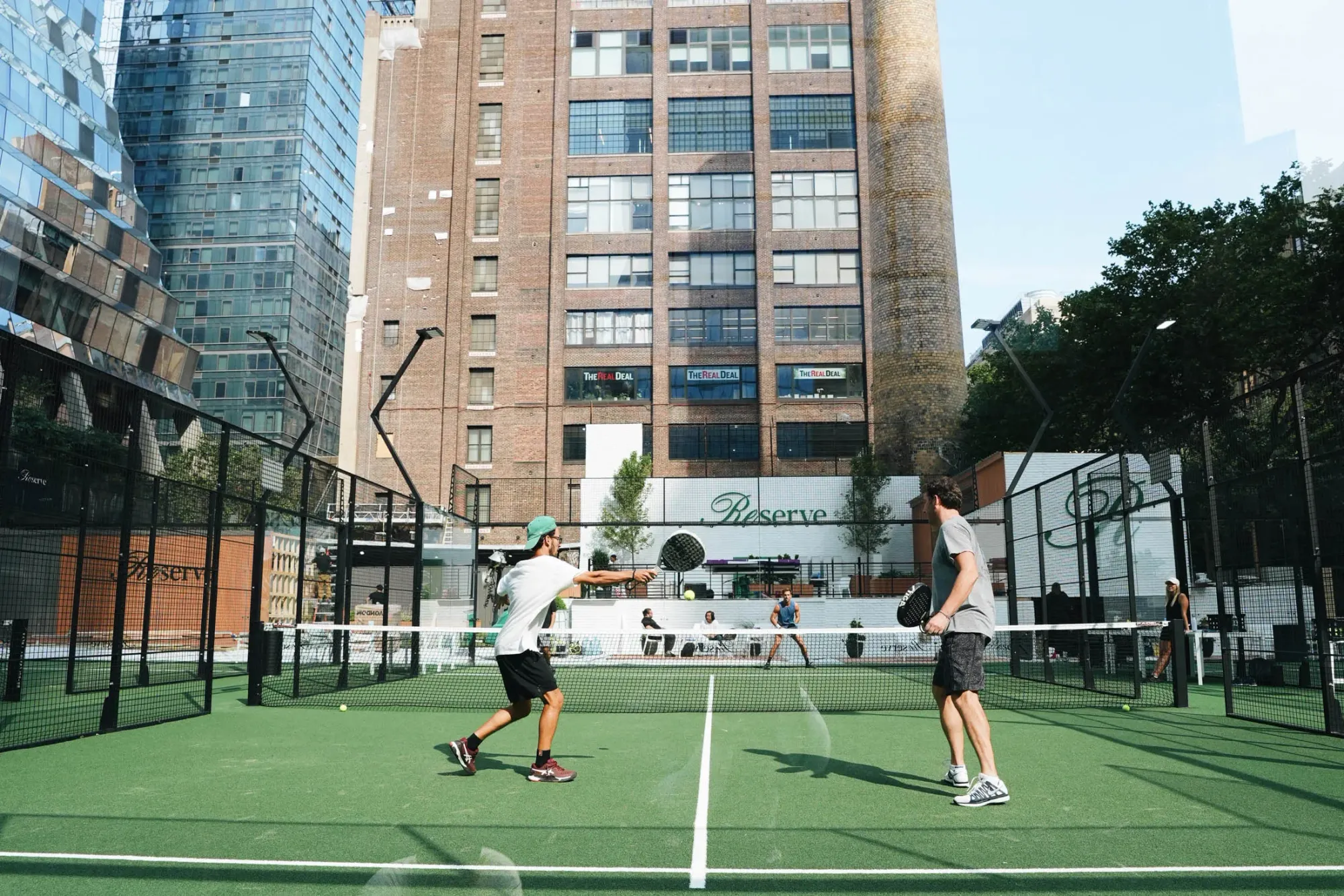
When a sport is on the rise, the last thing it needs is a geopolitical curveball.
But that’s exactly what padel — the fast-growing, racket-sport hybrid that’s taken Europe and Latin America by storm — is now facing in the United States.
With Donald Trump’s return to the political spotlight and a fresh wave of punitive tariffs aimed at Chinese imports, padel’s fragile growth in America may be hitting its first true test.
The question at hand: Can padel in the USA survive Trump’s tariffs? The answer — like a tight tiebreak in the third set — isn’t yet clear. But warning signs are everywhere.
Will the price of padel rackets increase with Trump's tariffs?
Most premium padel rackets used globally — including many sold under European brands — are manufactured in China.
The reason is simple: advanced carbon fibre moulding, EVA core production, and cost-efficient assembly can all be done at scale and at lower cost in China.
Under the latest tariff structure, goods from China now face import levies as high as 145%, and that includes sporting goods, unless specifically exempted. Padel rackets haven’t been spared.
While Trump’s administration initially offered temporary reprieves for consumer electronics like smartphones and computers, padel equipment doesn’t fall into that tech-friendly “bucket.” That means importers bringing Chinese-made rackets into the US could see their landed costs more than double overnight.
For an emerging sport, price elasticity is everything. Most US consumers aren’t yet familiar with padel, and shelling out $300–$400 for a carbon racket — versus $150–$200 pre-tariff — is unlikely to attract newcomers.
Will the price of playing padel go up after Trump's tariffs?
Tariffs don’t just stop at rackets. Padel courts themselves are imported, usually from Spain, Portugal, or Italy. But many suppliers still source raw materials — tempered glass, steel framing, even artificial turf — from China.
And with new tariffs on semiconductors and electronics, even the smart lighting and booking systems used on modern padel courts are getting more expensive.
Construction companies building padel courts in the US have already flagged rising material costs, and the knock-on effect is simple: fewer courts get built, growth slows down, and the padel boom fizzles out before it catches fire.
In short, if it’s now 25–30% more expensive to build a standard double court — typically priced between $40,000–$60,000 — the already niche market of US investors interested in padel may hesitate.
Padel players will likely have to foot the bill if the cost of building and running padel clubs increase, meaning that padel will likely become more elitist in cities like New York, L.A., and Miami.
What is the padel market like in the US?
Padel has spent the last two years gaining traction in the US. High-profile investments from sports stars like LeBron James and Serena Williams, growing social buzz on TikTok and Instagram, and the rising presence of court operators like Padel Haus and Reserve have helped the sport find its footing.
But that growth is still in its infancy.
Unlike in Spain, where padel courts are commonplace, the US remains a padel desert with a few urban oases.
The United States has an estimated 70 padel clubs and 500 padel courts according to the latest FIP study.
Tariff-induced cost hikes hit hardest during this exact moment — the scaling phase, when cost-sensitive infrastructure decisions are being made.
With uncertainty over how long the 90-day tariff pause will last and the looming possibility of further levies, it’s a tough time to be importing anything, let alone building out a niche sport.
The impact of Donald Trump's tariffs
While Donald Trump argues that these tariffs are part of a larger strategy to bring manufacturing back to American soil, the timeline simply doesn’t favour padel.
Shifting racket production from China to Mexico or the US is theoretically possible — but it could take years, if not a decade, to scale up the necessary facilities and expertise.
And with most of the major padel brands being based in Spain, with the majority of their sales coming from Europe, South America, the appetite to shift manufacturing to serve a juvenile American padel market is not there.
In the meantime, smaller US-based padel operators — many of whom rely on direct-to-consumer imports — are caught in the crossfire.
The real danger isn’t just higher prices. It’s uncertainty. Brands and suppliers don’t know what products will be taxed next.
After seeing an influx of Venture Capitalists investing in padel last year, investors are now pulling back, waiting to see if this is a temporary squall or a structural shift.
The reduction of investor interest will make it more difficult for new clubs to acquire funding, and existing clubs to weather the economic storm that the country could be facing in the wake of Trump's tariffs.
Will padel adapt — Or stall?
If padel is to survive and thrive in the US, it will need to adapt quickly. That might mean:
- Encouraging US-based distribution from European manufacturers not tied to Chinese supply chains.
- Investing in local production, even at lower margins.
- Leveraging membership models and club-based ownership to offset higher equipment costs.
- Doubling down on community events and grassroots efforts to keep momentum alive — even as equipment becomes more expensive.
But let’s not sugar-coat it. Tariffs of this scale don’t just raise prices. They shake the entire value chain, from supply logistics to investor confidence. And for a sport like padel, which relies on cross-border cooperation to grow, that’s a genuine threat.
Can padel in the USA Survive?
It can — but not without bruises.
If Trump’s tariffs stay in place or deepen, padel’s expansion in the US will slow, especially in secondary markets and mid-sized cities. The coasts may hold on — New York and Miami have strong momentum — but broader adoption will suffer.
Ultimately, padel needs policy stability, affordable gear, and accessible courts to grow. Right now, it’s got none of the three.
Want to support padel’s growth in the US?
Support local clubs. Stock up on your favourite padel rackets from the best padel stores around. Buy from brands investing in American distribution. And keep playing — because this sport’s too good to let politics ruin it.
Are you living in the USA, and have you experienced any changes after the Trump tariffs were implemented? Let us know in the comments below 👇
Want more like this? Check out the best padel rackets of 2025:
- Best Intermediate Padel Rackets of 2025
- Best Beginner Padel Rackets of 2025
- The 8 best cheap padel rackets under £100 to buy in 2025
- The 6 Best Women's Padel Rackets of 2025
- The best Adidas padel rackets to buy in 2025
- The best Babolat padel rackets to buy in 2025
- The best Bullpadel padel rackets of 2025
- Best NOX padel rackets 2025 [ranked]
- Best Siux Padel Rackets of 2025
- The best HEAD padel rackets to buy in 2025
- 5 best padel stores to buy new rackets in 2025