

The 8 best beginner padel tips and tactics to help you win
Become a better padel player with our guide to the best padel tips and tricks for beginners who want to win more and improve faster.
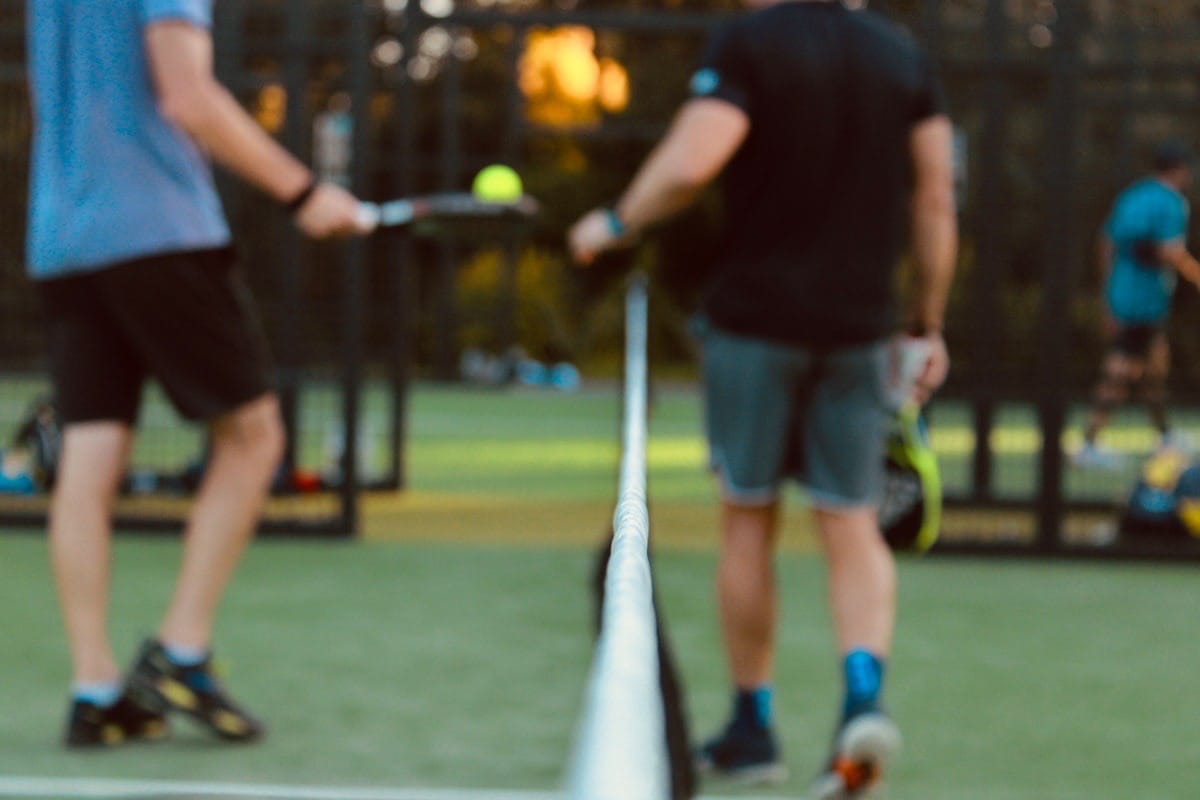
The pace, the unpredictability, and the social aspect of padel are so addictive.
You've been renting a court and some padel rackets with friends for a few weeks in a row, and now you're beginning to get hooked.
You're even looking at picking up your first ever padel racket, maybe you'll even pick up some padel shoes!
Now is the time to start thinking about padel differently.
You're getting serious about becoming good. You want to take a few lessons. You want to be better than your friends.
This is the best time to start opening your mind to some fundamentals of the padel learning process that will help you become a better player.
Developing the correct technique, shot choices, and fundamentals of the sport will require coaching and playing more matches.
But there is more that you can introduce to your padel journey that can help you develop your skills more efficiently.
As a beginner, transitioning from tennis, I was arrogant–I thought I would become a padel pro overnight because I knew how to hit a good smash on day one.
Padel has a lovely way of humbling you. It will break you down, and make you rebuild as a better player, a better person even.
Not everyone’s journey through padel is the same, but here are some tips I wish I’d known at the beginning:
You’re not cheating on your friends by playing padel matches without them involved!
8. Embrace playing with strangers
Sounds small, but it’s massive. You may have a good group of friends that you enjoy playing with, but mixing it up and joining matches with strangers–on apps like Playtomic–is vital to your development.
Playing with different padel players will teach you how to communicate fast, read different playing styles quickly, and adapt under pressure.
And don't feel bad.
You’re not cheating on your friends by playing padel matches without them involved! You're training to become a better player.
If you're in a new city, try to find a game.
If you have the afternoon off work, call your local padel club or use Playtomic to find matches at your level.
Padel is a social sport, and once you get over the anxiety of playing with strangers, the quicker you'll learn!
7. The walls aren’t enemies—they’re your best mates
If you learned to drive in a manual car, you may remember trying to avoid hill-starts at all costs. Avoiding the embarrassment of stalling the car on a steep incline. Avoiding burning your driving instructor's clutch out.
Walls in padel are very similar in that sense.
It's WAY better to embrace them, learn how to play with the walls, rather than avoiding them at all costs.
“The walls aren’t your enemy. They’re your secret weapon.”
You will encounter a vast amount of tennis players early on in your journey who would rather run full-pelt into the wall in order to return a ball before it hits the glass.
Don’t become one—you’ll be easy to play against once you reveal this glaring weakness in the warm-up.
The wall gives you time—use it.
6. Find a coach early and often & stop listening to your peers
The worst thing we see as padel coaches is beginner and intermediate padel players trying to coach one-another.
Getting advice from somebody at your level is often counterproductive.
You're more likely to pick up bad habits if you listen to somebody who is not a qualified padel coach.
“Stop taking advice from your mate—get a coach instead.”
Getting guidance from someone who knows what they’re doing can fast-track your improvement like nothing else.
Even one or two good lessons can eliminate bad habits that might otherwise stick with you for months.
5. Stop standing in no man’s land
If you’re always caught standing one or two steps in front of the service line, you’re in the wrong place!
Good padel has clear zones—either you’re up at the net, applying pressure, or you’re back–one big step in front of the glass–absorbing and embracing the pressure.
Standing one or two steps in front of the service line is like being a sitting duck.
A medium-to-slow-paced ball placed at your feet is enough to win the point, because you’re unlikely to have a good opportunity to block the ball or have enough time to play a good return off the glass.
4. Build patterns—not just shots
So you have a great smash, good for you! Or maybe you love hitting every volley cross-court to the fence, that's nice!
But the issue is, every time you hit the same shot with the same pace in the same direction, you become predictable and easy to read.
“You don’t need bigger shots—you need smarter patterns.”
Try to think about your padel in terms of space. Where is the space, on the left, centre, or right-side of the court? At the front, or at the back?
When you start to vary your speed, shot selection, and where you're placing the ball, you’ll realise you’re winning points simply by moving your opponents around the court.
Not having to rely on your big smash, or your risky volley to win points, which will reduce mistakes, and ultimately, fatigue!
Even better, start creating go-to patterns of padel that make it hard for your opponents to read, but easier for your partner to predict your next shot.
3. Progress isn’t always linear—stick with it
You’ll have weeks where everything clicks. You'll win some tournaments. You'll feel invincible!
Then you’ll play a tournament where you lose every match to opponents you deem inferior to your greatness.
You feel like a beginner again.
Padel will always have a way of humbling you–embrace it
This is totally normal.
Focus on the process rather than the result.
For me, when I'm having a bad day, I try to focus on the process of moving my feet more quickly (extra tip: watch how much padel pro Bea Gonzalez moves her feet during rallies), playing lower in defence (bend your knees more), and consistently playing the ball over the net (hit high and deeper lobs).
By focusing on these basics, instead of the score, you'll find yourself building confidence and opening up gaps on the padel court to attack.
2. Make every match a lesson
Win or lose, ask yourself afterwards: what worked? What didn’t? Where did we lose the point?
The players who reflect are the players who evolve.
The players who blame their partner every time they lose are the ones who stay stagnant or even end up quitting in the first year.
Padel matches aren’t just contests—they’re classrooms. Everybody on court with you is there to learn, nobody is an expert.
Thinking that you're better than everyone and that you played a perfect game is either: not true, or it means you're playing at the wrong level.
1. Enjoy playing padel—else what’s the point?
Nobody likes to play with a person who is constantly angry or frustrated.
If you blame your padel racket, shoes, the weather, the court, or your partner for why you're losing, you're missing the whole point of padel–the fun!
Padel is fun. And if you can't enjoy it, maybe it's not for you.
If you’re not having fun, you’re doing padel wrong
Improvement is great, but if you’re not enjoying the ride, padel becomes a chore.
Celebrate the little wins, laugh at the mistakes, and play with people who lift you up.
What do the players who win the most matches have in common? They don’t panic. They don’t shout. They breathe, reset, and solve problems.
That’s how you stay in love with the game–and it's how you get invited to more matches.
If you turn up angry, hitting your racket against the net or fence when you lose a point, you’ll quickly run out of people who want to play with you.
That's it. You're good to go! It's worth saving this article somewhere, or even better, share it with your padel groups on WhatsApp.
But I highly recommend referencing it over the next few months and years as you develop, because you'll undoubtedly need reminders to keep your feet on the ground, to never stop learning, and enjoy every second you’re on the padel court!
💬 What was the best advice you received at the start of your padel journey? Let us know in the comments below 👇
Are you a beginner padel player? Or looking for extra motivation to start playing? Check out these beginner guides and fall in love with the sport: